
KNITTING, HISTORY AND CULTURE ON THE ISLAND OF GOTLAND, SWEDEN, WITH ERIKA ÅBERG, DESIGNER AND AUTHOR OF MANY BOOKS ON KNITTING
APRIL 2-9 2027

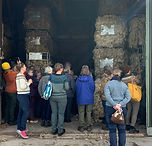


During a lovely week in April you will experience a rugged and beautiful Gotland teeming with life.
We will visit spinning mills and meet sheep, alpacas and mohair goats and delve into the Gotland knitting traditions including a special viewing of Hermanna Stengård's collections and the island's unique history.
Additionally there will be a knitting workshop and discussions with Erika Åberg who will accompany us throughout the tour. We will also meet some of the passionate Gotlanders who keep the Gotland wool and knitting traditions alive.
Throughout the tour we will stay at the Strand Hotel in central Visby.


GOTLAND KNITTING AND HERMANNA STENGÅRD
Hermanna Stengård was born in Väskinde on Gotland in 1861. She was a teacher and also worked with handicrafts in the public school in Rone. Out of personal interest, she began collecting older Gotland knitting patterns and garments. She published her collection in the book "Gotländsk sticksöm" which was first released in 1925.
The collection was later catalogued and is now managed by the Gotland Handicrafts Association.
This collection has inspired many designers and authors and has been spread widely over the years, especially in various knitting books on Nordic and Scandinavian knitting traditions.
In 2014, Hermanna's book was reprinted and here we find a large number of knitted fragments and garments, many of which originate from the island, while others have a clear background elsewhere.
Many of the garments are multi-coloured knits with graphic, now classic patterns, such as roses, sun wheels, and lingonberry twigs. Others are knitted with lifted stitches or structural patterns.
GOTLAND
Gotland is Sweden's largest island, situated in the Baltic Sea about 100 kilometers east of the Swedish mainland. The island of Gotland also includes Fårö, the Karlsö islands, Gotska Sandön, Östergarnsholm, and several smaller islands.
The geography and wildlife of Gotland differ from the rest of Sweden. This is partly due to the island's isolated location and partly because the rationalization of agriculture and forestry came later than in the rest of the country. However, it is primarily the barren limestone bedrock that has created the conditions for a very unique flora and fauna.
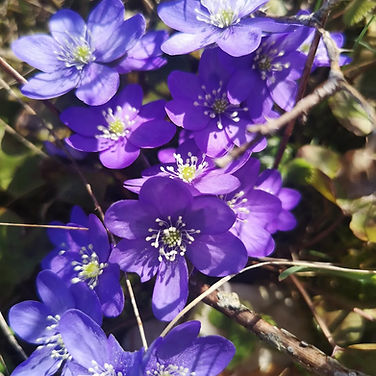
There are several endemic species here, such as the Gotland grass snake, the brown eyebright, and the Gotland pasqueflower.
Gotland’s prehistory dates back more than 400 million years, to the Silurian period. At that time, present-day Sweden was near the equator, and Gotland was likely a tropical coral reef environment in a shallow, warm sea, rich in species like crinoids, brachiopods, and trilobites. Over millions of years, dead organisms, silt, and corals built up
the bedrock as limestone and marlstone around the reefs.



LANDSCAPE, FLORA, AND FAUNA
Gotland’s bedrock is very rich in fossils, which are visible everywhere along our stone beaches. The island got its current shape during and after the last ice age. Gotland looks a bit like a wedding cake on the western side, rising in high, steep cliffs that continue below the sea surface where the depth suddenly increases. The eastern side is generally flatter, with gently sloping beaches.
The island has rocky outcrops, low-growing pine forests, deciduous meadows, grazing and farmland. Several inland lakes, called swamps here, remain despite extensive drainage efforts, including lake Tingstäde and lake Bästeträsk. Along the coasts are shingle fields and beach ridges alternating with long sand and stone beaches. The vegetation is rich with many species of orchids. Birdlife is intense, with the Baltic Sea’s only bird cliffs on two islands off Gotland’s west coast, Lilla and Stora Karlsö, where both guillemots and razorbills nest.
North of Fårö, on Gotska Sandön and on Lilla Karlsö, there are colonies of grey seals. However, many mammals common on the mainland, such as moose, badger, and weasel, are absent.
With 92 medieval churches still in use, Gotland is Sweden's most church-dense municipality. The island’s antiquity, history, and traditions are evident and visible in everyday life here in everything from picture stones and burial mounds to distinctive place names.
In 2019, according to the Swedish Board of Agriculture, there were 68,300 sheep: ewes, rams, and lambs on Gotland, representing 12% of all sheep in the country.
TOUR ITINERARY
FRIDAY APRIL 2
Elisabeth will meet the group at Arlanda airport, Stockholm at 12.00 (the exact place will be decided closer to the time).
The group will then fly to Visby on Gotland.
After checking in at our hotel Erika will give an introductory talk on wool and life in Gotland.
In the evening we have dinner at our hotel (included).


SATURDAY APRIL 3
The day begins with a special viewing of Hermanna Stengård's collection of knitting samples typical of Gotland. Lena Ideström from the Gotland Handicraft Association will tell us about the collection and we will see some favourites selected by Erika.
After lunch at our hotel (included) we visit the Gotland Museum focusing on the, for Gotland, typical picture stones designs and the remainder of the afternoon will also be spent in Visby with a visit to the legendary shop Yllet Inredning and then some free time to explore this beautiful medieval town.
After dinner at a restaurant of your choice (not included) those who would like to can meet at our hotel for some after dinner knit and natter. There are plenty of seating areas to choose from at the hotel.
SUNDAY APRIL 4
After breakfast we'll have a guided walk through Visby with a local guide followed by lunch (included).
After lunch we will meet at our hotel for a workshop led by Erika.
Dinner will be at a restaurant of your choice in Visby (not included) and after dinner those who would like to can meet at our hotel for some knit and natter.


MONDAY APRIL 5
Today we visit Ullkontoret with its farm shop - Sweden's only large-scale wool scouring mill where Jenny Andersson and Hans Bulthuis, who run the facility, will tell us about their work.
After the visit to Ullkontoret we will visit Roma Kungsgård, where we'll have a guided tour to learn more about Gotland's former centre of power and history.
After lunch (included) we will head further east to visit the rauk field of Folhammar Nature Reserve. A rauk is a limestone pillar that can be seen in various places on the island.
The last stop of the day before we head back to Visby will be at Ansarve farm, a Gotland sheep farm where the owners sells woollen products from their own sheep.
After dinner at a restaurant of your choice (not included), those who would like to can meet at our hotel for some after dinner knit and natter.
TUESDAY APRIL 6
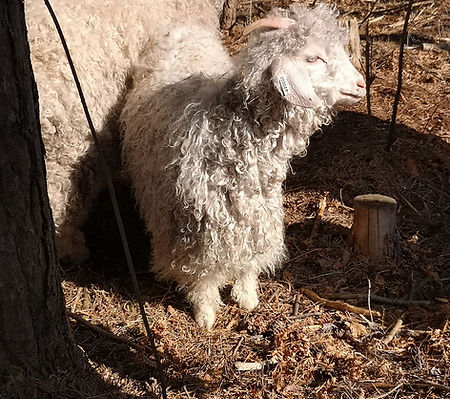
After breakfast we set off on our first day of excursions and the first stop is at Gotlands Alpacka in Hejde where we'll have a tour and meet both alpacas and angora goats followed by a visit to the farm shop.
After lunch (included) we will visit one of the spinning mills on the island - Gotlands Spinneri in Fardhem where we will be given a tour of the mill and a chance to buy some of the fantastic yarns produced there.
We then go back to Visby along the beautiful west coast to take in the scenery.
After dinner at a restaurant of your choice (not included), those who would like to can meet at our hotel for some after dinner knit and natter.

WEDNESDAY APRIL 7
In Gotland there are three spinning mills and today we visit Stenkyrka Ullspinneri north of Visby.
After lunch (included) we'll go for a short walk at Lickershamn on the west coast before visiting the last of the three spinning mills on the island. This is the mill, located in Visby, run by Jenny and Hans who also run the wool scouring plant we visited on Tuesday.
After dinner at a restaurant of your choice (not included) those who would like to can meet at our hotel for some knit and natter.
THURSDAY APRIL 8
Today we're heading north to Fårö, "Sheep Island".
Fårö might be best known for film director Ingmar Bergman, who lived here for many years.
On Fårö we visit the rauk field of Langhammar and the small fishing village Helgumannen, both iconic areas of this small island.
We will then head back to the main island of Gotland for lunch (included) before we visit Gotlands Strumpfabrik, "The Sock Factory" and Barbro Sandell Design.
In the evening we have dinner at our hotel (included).


FRIDAY APRIL 9
Before going to the airport at 12.30 for our flight at 14.20 there is time for one last look around the lovely town of Visby.
There is a café at the airport where a light lunch can be purchased.
We land at Arlanda airport at 15.10.
The program may be alterered somewhat due to circumstances beyond our control and the itinerary could change so that the order of the excursions might be rearranged.
Price:
24 900 SEK (approximately €2240/£1900/$2540, July 11 2026 exchange rate)
Single room supplement 3 600 SEK (approximately €335/£275,$368, July 11 2026 exchange rate)
16-22 participants
The tour will go ahead with a minimum of 16 participants.
Click here for our terms and conditions.
To book, please send an email to redfoxtravel2018@gmail.com and if you have any questions please email or phone
+46 706 109088.
Included in the price:
-
Arlanda Stockolm - Visby return flights
-
Seven nights at Strand Hotel Visby including breakfast
-
All transportation included in the program
-
Six lunches
-
Two two course dinners (on April 2 & 8).
-
Workshop and talk with Erika
-
Tour guide (Elisabeth Nicholson)
-
Guided tours and entrance fees throughout the tour
Not included in the price:
-
Travel to and from Arlanda airport
-
The meals that are not specified as included in the program
-
Travel insurance